What is my worth CLICK HERE

Monday, February 22, 2016

ATTENTION BUYERS OWN AND LIVE IN RIALTO!

Selling Southern California!
www.TheCaliforniaPropertyConnection.biz

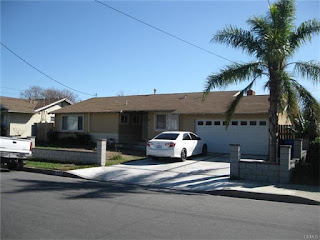
RIALTO HOME FOR SALE!
$275,000

This is an opportunity to own this GREEN Gem in a very quiet area just ask the neighbors they take pride in this community, ready to move in with awesome exterior features such as , stucco pop out, newer windows, large front and read yard with rows of matured fruit trees, covered patio perfect for family gatherings. The interior includes a very calming relaxing gorgeous mint green tile and newer paint thought, newer cabinets and granite counter tops, take a look at the tile in the bath rooms no expense was spared to make this house feel like you where in a spa. NEWER CENTRAL AC/HEATING SYSTEM. NEW CONCRETE DRIVEWAY. Come take a look and make this YOUR HOME!!!


ML#:   IV16031512
BED / BATH:   3/2,0,0,0
SQFT(src):   1,288 (A)
PRICE PER SQFT:   $213.51
LOT(src):   0.177/7,702 (A)
GARAGE:  2/Attached
YEAR BLT(src):  1956 (ASR)
SUB TYPE:   SFR (D)
DOM / CDOM:  7/12
SALE TYPE:  Standard
APN:  0127472300000


An Expert In Your Court
Robert De La Rosa
"CALL NOW 909.271.5640"
"Get Qualified Now By A Loan Professional" 

Coldwell Banker Town & Country
501 W. Redlands Blvd
Redlands CA, 92373
CalBre 01435824

All information deemed reliable but not guaranteed.

COURTESY OF
ROMIE FLORES

Tuesday, February 9, 2016

Tax Credits for Replacing Windows and Doors.

Selling Southern California!
www.TheCaliforniaPropertyConnection.biz

Tax Credits for Replacing Windows and Doors


Published: January 15, 2016
If you're in the market for new windows, a skylight, or a new exterior door, the Feds have made the cost a little more palatable with an energy tax credit.


If you installed new windows, doors, or skylights, you may be able to claim up to $500 in tax credits.
  • For doors, you can claim up to a $500 credit.
  • For windows and skylights, you can claim only up to a $200 credit. (That’s total -- not per window.)
  • 10% of expenditures, up to a lifetime $500, for all energy improvements combined.
  • Installation costs aren’t covered.
  • Save receipts and labels.
  • File IRS Form 5695.
The Energy Star site is your safest bet for information on how to get the credit and what's covered. Don’t rely solely on contractors who may not know the details or who promise their products will get the credit in order to make a sale.
Read on to find out if you qualify for this tax credit.
Should you be thinking about window replacement?
Adding up the costs and savings
Do your replacements qualify for tax credit?

Should you be thinking about window replacement?


A good rule of thumb for window replacement:
  • Don’t bother if they’re less than 15 years old, says Jim Rooney, a home inspector in Annapolis, Md. Savings on your energy bills will be negligible since window technology hasn’t changed that radically and the integrity of your windows should still be intact.
  • Shoddy installation or poor manufacturing may call for exceptions to the 15-year rule. Windows that are 20, 30, or more years old are prime candidates for replacement.
Most of your focus should be on windows, since they’re more numerous. However:
  • Skylights are notorious for energy loss, too, not to mention water leaks.
  • Exterior doors tend to outlast windows, so keep them unless the upgrade is purely for aesthetic reasons. Besides, weather stripping and snug sweeps can boost the energy efficiency of exterior doors for a whole lot less money.

Adding up the costs and savings

With windows, doors, and skylights, you get what you pay for:
  • Expect to shell out between $500 and $1,000 per window, including installation, or about $10,000 total for a moderately sized house of about 2,000 square feet.
  • New energy-credit-qualified doors and skylights are also in the $500 to $1,000 range, including installation.
Products on the higher end of the cost scale are usually better constructed and more energy efficient, says Tom Herron of the National Fenestration Rating Council. NFRC is a non-profit organization that administers the rating and labeling system for the energy performance of windows, doors, and skylights. 

It could take years to recoup the upfront costs, but you should see an immediate reduction in your energy bills.

In general, you’ll save $126 to $465 per year replacing single-pane windows in a 2,000-square-foot house with tax-credit-eligible windows, according to the Efficient Windows Collaborative, a trade group.
In other words, you'll save 15% to 40% off the typical energy bill.

Do your replacements qualify for tax credit?

A label alone doesn’t guarantee your new windows, doors, and skylights qualify for the energy tax credit, but it does provide critical information related to eligibility.
To qualify, window, doors, and skylights must meet Energy Star 6.0 standards based on region of the country. Those standards include ratings for:
  • U-factor, which measures how well a product prevents heat from escaping.
  • Solar Heat Gain Coefficient (SHGC), which gauges how well a product blocks heat from the sun.
Energy Star may modify these requirements, so check online before making a purchase.
Labels also carry information on light transmission, air leakage, and condensation resistance.
Herron, of the NFRC, says 80% to 85% of the manufacturers in North America provide NFRC labels. All Energy Star-qualified windows carry an NFRC label, according to Energy Star, a joint program of the U.S. Department of Energy and the U.S. Environmental Protection Agency that promotes energy-efficient products and practices.
Resist the urge to trim costs by purchasing cheaper windows, doors, and skylights with poor U-factor and SHGC ratings. Not only will you miss out on the tax credit, but energy bills won’t come down much.
This article provides general information about tax laws and consequences, but isn't intended to be relied upon as tax or legal advice applicable to particular transactions or circumstances. Consult a tax professional for such advice.


Read more: http://members.houselogic.com/articles/window-replacement-tax-credit/preview/#ixzz3zglUnHgi

By: Gil Rudawsky
Follow us: @HouseLogic on Twitter | HouseLogic on Facebook

An Expert In Your Court
Robert De La Rosa
"CALL NOW 909.271.5640"
"Get Qualified Now By A Loan Professional" 

Coldwell Banker Town & Country
501 W. Redlands Blvd
Redlands CA, 92373
CalBre 01435824

Tuesday, February 2, 2016

Energy Tax Credits for Insulation!

Selling Southern California!

Energy Tax Credits for Insulation


Published: January 2016
Adding insulation isn't just good news for your comfort and your utility bills. It could mean a tax credit, too.
Whether it’s summer heat or winter cold, insulation makes your house a lot more livable. If you added insulation last year, you might be eligible to collect a $500 energy tax credit.
Tax credit particulars:
  • 10% of expenditures, up to $500 for the year, for all energy improvements combined. It's a lifetime credit.
  • Save receipts and labels for Uncle Sam.
  • Be sure to file IRS Form 5695 with your return.
The Energy Star site is your safest bet for information on how to get the credit. Energy Star has been pretty flexible on what it allows for this credit:
  • Batts
  • Rolls
  • Blow-in fibers
  • Rigid boards
  • Expanding spray
  • Pour-in-place 
Products that reduce air leaks also qualify:
  • Weather stripping (such as fabric, foam, or metal to provide a seal)
  • Spray foam in a can, designed to air seal
  • Caulk designed to air seal
  • House wrap
Installation isn’t covered.
Don’t rely solely on contractors who may not know the details or who promise their products will get the credit in order to make a sale.
Read on to learn more:
Insulation costs
Insulation is measured in R-values
Savings and energy audits

Insulation costs

Adding insulation is a relatively affordable home improvement project, and the savings can be felt almost immediately. Some DIYers can even tackle the project themselves over a weekend.
Cost for adding attic insulation to a 2,200-square-foot home:
  • $1,000 to $2,500 including labor, depending on how much you put in and how easy it is to install.
  • Effort and expense go up when you add it to exterior walls or around hard-to-reach ductwork.

Insulation is measured in R-values

The higher the number value (measuring its resistance to heat flow), the better the insulating power.
Recommended R-values are 30 to 60 for most attics, according to the U.S. Department of Energy. R-38 (or about 12 to 15 inches, depending on the type) is the sweet spot for most attics, says Energy Star, a joint program of the DOE and U.S. Environmental Protection Agency. 

In colder climates, go for R-49. 

The DOE’s online calculator recommends R-values for all areas of your home’s “envelope”:
  • Attic
  • Walls
  • Floors
  • Basement
  • Crawl spaces
You need more insulation if your insulation is level with or below the attic floor joists.
Just about all types (fiberglass, cellulose, mineral wool, spray foam, foam board, cotton batting) qualify for the energy tax credit, as long as its primary purpose is to:
  • Insulate
  • Bring your home up to recommended R-value guidelines
Insulated siding doesn’t count, because its main purpose is not insulation, but simply covering your house.
Generally, most homes built before 1980 have inadequate insulation. The easiest kind to add is blown loose-fill insulation. You’ll probably need to hire a contractor. Since insulating an attic isn’t too complicated, you can get quotes—at least three—by phone. However, get a copy of the quote in writing before work starts, and be sure it specifies R-value.
Michael Kwart, executive director of the Insulation Contractors Association of America, recommends rolled insulation for do-it-yourselfers. The new material can be added on top of the existing.

Savings and energy audits

Depending on where you live and how much insulation you already have, adding more can trim heating and cooling costs anywhere from 10% to 50%.
  • A home owner in the Northeast with an uninsulated attic, for instance, can save about $600 a year by adding about 15 inches of insulation (R-38) between the rafters, according to the Energy Department.
  • Just 6 inches can net annual savings of about $200.
Energy audits uncover even more ways to save energy
Besides adding new insulation, conduct a whole-house energy audit to find other ways to reduce power consumption and save even more on monthly bills.
Caulk around drafty windows and doors, and stop gaps in siding and the foundation, says Matt Golden, president and founder of San Francisco-based Sustainable Spaces. Reducing a home’s air leakage by 25% can lower annual energy costs by about $300, according to the Lawrence Berkeley National Laboratory.
This article provides general information about tax laws and consequences, but isn't intended to be relied upon as tax or legal advice applicable to particular transactions or circumstances. Consult a tax professional for such advice; tax laws may vary by jurisdiction.

Read more: http://members.houselogic.com/articles/tax-credits-adding-or-replacing-insulation/preview/#ixzz3z2ATiGaB 

By: Gil Rudawsky
Follow us: @HouseLogic on Twitter | HouseLogic on Facebook


An Expert In Your Court
Robert De La Rosa
"CALL NOW 909.271.5640"
"Get Qualified Now By A Loan Professional" 

Coldwell Banker Town & Country
501 W. Redlands Blvd
Redlands CA, 92373
CalBre 01435824

Friday, January 29, 2016

6 Tips for Choosing the Best Offer for Your Home!

Selling Southern California!

6 Tips for Choosing the Best Offer for Your Home


Have a plan for reviewing purchase offers so you don't let the best slip through your fingers.
You’ve worked hard to get your home ready for sale and to price it properly. With any luck, offers will come quickly. You’ll need to review each carefully to determine its strengths and drawbacks and pick one to accept. Here’s a plan for evaluating offers.

1. Understand the process.

All offers are negotiable, as your agent will tell you. When you receive an offer, you can accept it, reject it, or respond by asking that terms be modified, which is called making a counteroffer.

2. Set baselines.

Decide in advance what terms are most important to you. For instance, if price is most important, you may need to be flexible on your closing date. Or if you want certainty that the transaction won’t fall apart because the buyer can’t get a mortgage, require a prequalified or cash buyer.

3. Create an offer review process.

If you think your home will receive multiple offers, work with your agent to establish a time frame during which buyers must submit offers. That gives your agent time to market your home to as many potential buyers as possible, and you time to review all the offers you receive.

4. Don’t take offers personally.

Selling your home can be emotional. But it’s simply a business transaction, and you should treat it that way. If your agent tells you a buyer complained that your kitchen is horribly outdated, justifying a lowball offer, don’t be offended. Consider it a sign the buyer is interested and understand that those comments are a negotiating tactic. Negotiate in kind.

5. Review every term.

Carefully evaluate all the terms of each offer. Price is important, but so are other terms. Is the buyer asking for property or fixtures -- such as appliances, furniture, or window treatments -- to be included in the sale that you plan to take with you?

Is the amount of earnest money the buyer proposes to deposit toward the downpayment sufficient? The lower the earnest money, the less painful it will be for the buyer to forfeit those funds by walking away from the purchase if problems arise.

Have the buyers attach a prequalification or pre-approval letter, which means they’ve already been approved for financing? Or does the offer include a financing or other contingency? If so, the buyers can walk away from the deal if they can't get a mortgage, and they'll take their earnest money back, too. Are you comfortable with that uncertainty?

Is the buyer asking you to make concessions, like covering some closing costs? Are you willing, and can you afford to do that? Does the buyer’s proposed closing date mesh with your timeline?

With each factor, ask yourself: Is this a deal breaker, or can I compromise to achieve my ultimate goal of closing the sale?

6. Be creative.

If you’ve received an unacceptable offer through your agent, ask questions to determine what’s most important to the buyer and see if you can meet that need. You may learn the buyer has to move quickly. That may allow you to stand firm on price but offer to close quickly. The key to successfully negotiating the sale is to remain flexible.


Read more: http://members.houselogic.com/articles/6-tips-choosing-best-offer-your-home/preview/#ixzz3yfn7RryN
By: G. M. Filisko
Follow us: @HouseLogic on Twitter | HouseLogic on Facebook


An Expert In Your Court
Robert De La Rosa
"CALL NOW 909.271.5640"
"Get Qualified Now By A Loan Professional" 

Coldwell Banker Town & Country
501 W. Redlands Blvd
Redlands CA, 92373
CalBre 01435824

Thursday, January 28, 2016

2015 Marked ‘Very Strong Year’ for New Homes!

Selling Southern California!
www.TheCaliforniaPropertyConnection.biz

DAILY REAL ESTATE NEWS | THURSDAY, JANUARY 28, 2016

Sales of new homes surged to an eight-year high last year, according to the final numbers released Wednesday by the U.S. Commerce Department. Sales of new single-family homes increased 14.5 percent last year to 501,000 units, the highest level since 2007.
Just in December, new-home sales rose 10.8 percent to a seasonally adjusted annual rate of 544,000, proving a strong end to 2015 for new-home construction.
“The December sales report is a great end to a very strong year,” says Ed Brady, chairman of the National Association of Home Builders. “As we move forward in 2016, we should see the housing market continue to make lasting gains.”
All four regions of the U.S. posted gains in new-home sales in December, led by the largest month-over-month gain in the Midwest with a 31.6 percent increase. Sales also rose 21 percent in the West; 20.8 percent in the Northeast; and 0.4 percent in the South.
"Relatively low interest rates and an improving economy are motivating buyers to make a new-home purchase," says NAHB Chief Economist David Crowe. "Builders are upping their inventory in response to heightened consumer interest. Housing inventory is now at its highest level since October 2009."
Inventories of new homes for sale is now at a 5.2-month supply at the current sales pace, the Commerce Department reports.
New-home prices averaged $294,575 for 2015, a 4 percent increase over the previous year.


An Expert In Your Court
Robert De La Rosa
"CALL NOW 909.271.5640"
"Get Qualified Now By A Loan Professional" 

Coldwell Banker Town & Country
501 W. Redlands Blvd
Redlands CA, 92373
CalBre 01435824