What is my worth CLICK HERE

Tuesday, August 18, 2015

TRID Guide Aims to Ensure On-Time Closings!

Selling Southern California!
www.TheCaliforniaPropertyConnection.biz

DAILY REAL ESTATE NEWS | TUESDAY, AUGUST 18, 2015

The Consumer Financial Protection Bureau has published a new guide for real estate agents detailing all the changes with the upcoming "Know Before You Owe" mortgage initiative, which goes into effect Oct. 3. The guide aims to help ensure "smooth and on-time closings" when the TILA-RESPA Integrated Disclosure rule are implemented.
Keep Tabs on TRID
The new mortgage rules are expected to have sweeping changes across the industry by merging the HUD-1 Settlement Statement, the Good Faith Estimate, and the Truth-in-Lending disclosure form into two new closing forms: a Loan Estimate and a Closing Disclosure.
The new rule also aims to provide consumers with more time to review the total costs of their mortgage prior to closing. The Loan Estimate form is due to consumers three days after they apply for a loan, while the Closing Disclosure form is due three days prior to closing.
CFPB's new toolkit for agents includes sections on how to have on-time closings, an overview of what has changed and the new loan documents, and the ability to share resources with your clients about the new rules.

An Expert In Your Court
Robert De La Rosa
"CALL NOW 909.271.5640"
"Get Qualified Now By A Loan Professional" 

Coldwell Banker Town & Country
501 W. Redlands Blvd
Redlands CA, 92373
CalBre 01435824

Monday, August 17, 2015

7 Tips for a Profitable Home Closing!

Selling Southern California!
www.TheCaliforniaPropertyConnection.biz

7 Tips for a Profitable Home Closing


Be sure you’re walking away with all the money you’re entitled to from the sale of your home.
When you’re ready to close on the sale of your home and move to your new home, you may be so close to the finish line that you coast, thinking there’s nothing left for you to do. Not so fast. It’s easy to waste a few dollars here and for mistakes to creep into your closing documents there, all adding up to a bundle of lost profit. Spot money-losing problems with these seven tips.

1.  Take services out of your name.

Avoid a dispute with the buyers after closing over things like fees for the cable service you forgot to discontinue. Contact every utility and service provider to end or transfer service to your new address as of the closing date.

If you’re on an automatic-fill schedule for heating oil or propane, don’t pay for a pre-closing refill that provides free fuel for the new owner. Contact your insurer to terminate coverage on your old home, get coverage on your new home, and ask whether you’re entitled to a refund of prepaid premium.

2.  Spread the word on your change of address.

Provide the post office with your forwarding address two to four weeks before the closing. Also notify credit card companies, publication subscription departments, friends and family, and your financial institutions of your new address.

3.  Manage the movers.

Scrutinize your moving company’s estimate. If you’re making a long-distance move, which is often billed according to weight, note the weight of your property and watch so the movers don’t use excessive padding to boost the weight. Also check with your homeowners insurer about coverage for your move. Usually movers cover only what they pack.

4.  Do the settlement math.

Title company employees are only human, so they can make mistakes. The day before your closing, check the math on your HUD-1 Settlement Statement.

5.  Review charges on your settlement statement.

Are all mortgages being paid off, and are the payoff amounts correct? If your real estate agent promised you extras -- such as a discounted commission or a home warranty policy -- make sure that’s included. Also check whether your real estate agent or title company added fees that weren’t disclosed earlier. If any party suggests leaving items off the settlement statement, consult a lawyer about whether that might expose you to legal risk.

6.  Search for missing credits.

Be sure the settlement company properly credited you for prepaid expenses, such as property taxes and homeowners association fees, if applicable. If you’ve prepaid taxes for the year, you’re entitled to a credit for the time you no longer own the home. Have you been credited for heating oil or propane left in the tank?

7.  Don’t leave money in escrow.

End your home sale closing with nothing unresolved. Make sure the title company releases money already held in escrow for you, and avoid leaving sales proceeds in a new escrow to be dickered over later.

By: G. M. Filisko


An Expert In Your Court
Robert De La Rosa
"CALL NOW 909.271.5640"
"Get Qualified Now By A Loan Professional" 

Coldwell Banker Town & Country
501 W. Redlands Blvd
Redlands CA, 92373
CalBre 01435824

Friday, August 14, 2015

Budget Kitchen Remodeling: 5 Money-Saving Steps!

Selling Southern California!
www.TheCaliforniaPropertyConnection.biz

Budget Kitchen Remodeling: 5 Money-Saving Steps


Can't afford an entire kitchen remodel in one fell swoop? You can complete the work in 5 budget-saving stages (and still cook dinner during the down time).
Major kitchen remodels are among the most popular home improvements, but a revamped cooking and gathering space can set you back a pretty penny. According to "Remodeling" magazine's 2015 "Cost vs. Value Report," a major, 200-square-foot kitchen remodel costs $56,768, with a 67.8% return on investment come selling time.

If you can’t come up with all that cash or take out a loan to do the remodel in one shot, a good strategy is to proceed in stages. By breaking down the kitchen remodeling process, you’ll be able to proceed at your own pace, as time and money allow.

Related: Stress Less! 6 Things You Can Do for an Anxiety-Free Remodel
Stage One: Start with a Complete Design Plan 

Your plan should be comprehensive and detailed — everything from the location of the refrigerator to which direction the cabinet doors will open to whether you need a spice drawer.

To save time (and money) during tear-out and construction, plan on using your existing walls and kitchen configuration. That’ll keep plumbing and electrical systems mostly intact, and you won’t have the added expense — and mess — of tearing out walls.

Joseph Feinberg, vice president of Allied Kitchen and Bath in Fort Lauderdale, Fla., recommends hiring a professional designer, such as an architect or a certified kitchen designer, who can make sure the details of your plans are complete. You’ll pay about 10% of the total project for a pro designer, but you’ll save a whole bunch of headaches that would likely cost as much — or more — to fix. Plus, a pro is likely to offer smart solutions you hadn’t thought of.

For a nominal fee, you also can get design help from a major home improvement store. However, you’ll be expected to purchase some of your cabinets and appliances from that store.
  • Cost: professional designer: $5,800 (10% of total)
  • Key strategies: Once your plans are set, you can hold onto them until you’re ready to remodel.
  • Time frame: 3 to 6 months
Read on to learn more budget kitchen remodeling tips:
Stage Two: Order the Cabinets, Appliances, and Lighting Fixtures
Stage Three: Gut the Kitchen and Do the Electrical and Plumbing Work
Stage Four: Install Cabinets, Countertops, Appliances, Flooring, and Fixtures
Final Phases: Upgrade if Necessary

Stage Two: Order the Cabinets, Appliances, and Lighting Fixtures

Cabinets and appliances are the biggest investments in your kitchen remodeling project. If you're remodeling in stages, you can order them any time after the plans are complete and store them in a garage (away from moisture) or in a spare room until you're ready to pull the trigger on the installation.
Remember that it may take four to six weeks from the day you order them for your cabinets to be delivered.

Related: How to Choose Stock Cabinets for Your Kitchen

If you can't afford all new appliances, keep your old ones for now -- but plan to buy either the same sizes, or choose larger sizes and design your cabinets around those larger measurements. You can replace appliances as budget permits later on.

Related: Appliance Buying Guides

The same goes for your lighting fixtures: If you can live with your old ones for now, you’ll save money by reusing them.

You’ll have to decide about flooring, too — one of the trickier decisions to make because it also affects how and when you install cabinets.

You’ll need to know if your old flooring runs underneath your cabinets, or if the flooring butts up against the cabinet sides and toe kicks. If the flooring runs underneath, you’ll have some leeway for new cabinet configurations — just be sure the old flooring will cover any newly exposed floor areas. Here are points to remember:
  • Keep old flooring for cost savings. This works if your new cabinets match your old layout, so that the new cabinets fit exactly into the old flooring configuration. If the existing flooring runs underneath your cabinets and covers all flooring area, then any new cabinet configuration will be fine.
  • Keep your old flooring for now and cover it or replace it later. Again, this works if your cabinet configuration is identical to the old layout.
However, if you plan to cover your old flooring or tear it out and replace it at some point in the future, remember that your new flooring might raise the height of your floor, effectively lowering your cabinet height.

For thin new floor coverings, such as vinyl and linoleum, the change is imperceptible. For thicker floorings, such as wood and tile, you might want to take into account the change in floor height by installing your new cabinets on shims.
  • Cost: cabinets: $16,000 (27% of total); appliances and lighting fixtures: $8,500 (15% of total); vinyl flooring: $1,000 (2% of total)
  • Key strategy: Keep old appliances, lighting fixtures, and flooring and use them until you can afford new ones.
  • Time frame: 2 to 3 weeks

Stage Three: Gut the Kitchen and Do the Electrical and Plumbing Work

Here's where the remodel gets messy. Old cabinetry and appliances are removed, and walls may have to be opened up for new electrical circuits. Keep in close contact with your contractor during this stage so you can answer questions and clear up any problems quickly. A major kitchen remodel can take six to 10 weeks, depending on how extensive the project is.

During this stage, haul your refrigerator, microwave, and toaster oven to another room — near the laundry or the garage, for example — so you've got the means to cook meals. Feinberg suggests tackling this stage in the summer, when you can easily grilland eat outside. That’ll reduce the temptation to eat at restaurants, and will help keep your day-to-day costs under control.
  • Cost: $14,500 for tear-out and installation of new plumbing and electrical (25% of total)
  • Key strategies: Encourage your contractor to expedite the tear-out and installation of new systems. Plan a makeshift kitchen while the work is progressing. Schedule this work for summer when you can grill and eat outside.
  • Time frame: 6 to 10 weeks

Stage Four: Install Cabinets, Countertops, Appliances, Flooring, and Fixtures


If you’ve done your homework and bought key components in advance, you should roll through this phase. You've now got a (mostly) finished kitchen.

A high-end countertop and backsplash can be a sizable sum of money. If you can't quite swing it, put down a temporary top, such as painted marine plywood or inexpensive laminate. Later, you can upgrade to granite, tile, solid surface, or marble.
  • Cost: $12,000 (21% of total)
  • Key strategy: Install an inexpensive countertop; upgrade when you’re able.
  • Time frame: 1 to 2 weeks

Final Phases: Upgrade if Necessary

Replace the inexpensive countertop, pull up the laminate flooring, and put in tile or hardwood, or buy that new refrigerator you wanted but couldn't afford during the remodel. (Just make sure it fits in the space!)

Related: Why White Kitchens Stand the Test of Time

By: Gretchen Roberts


Read more: http://members.houselogic.com/articles/budget-kitchen-remodeling-advice/preview/#ixzz3inmaWKtC 


An Expert In Your Court
Robert De La Rosa
"CALL NOW 909.271.5640"
"Get Qualified Now By A Loan Professional" 

Coldwell Banker Town & Country
501 W. Redlands Blvd
Redlands CA, 92373
CalBre 01435824

Wednesday, July 29, 2015

Live in Colton Ca Double Wide Mobile Home Presented by Robert De la Rosa 909.271.5640

Selling Southern California!
www.TheCaliforniaPropertyConnection.biz

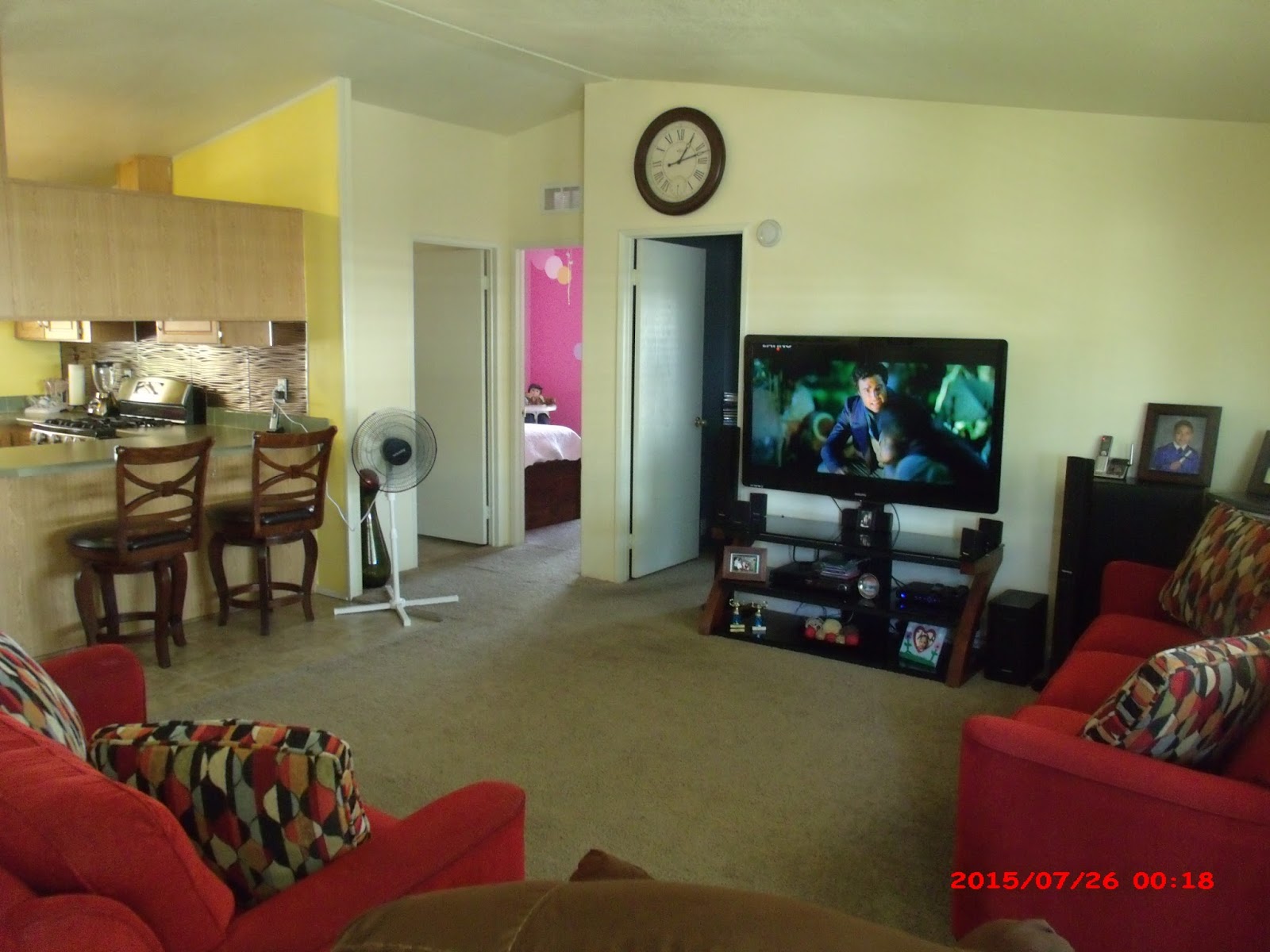
Live and own this Cozy double wide 2001 mobile home located in the community of the Cadena Creek Mobile Home Park located in the City of Colton CA 3 bedroom, 2 full bath with Jacuzzi tub in the master bedroom bathroom, Central A/C, open kitchen, dining area, private laundry room, covered parking, private storage shed, open floor plan, fireplace, tile flooring, the park includes pool, Jacuzzi, banquet room and other amenities for park occupants close to the 215, 91, 10 and the 60 freeways, shopping, dining, and other amenities for your convenience.


https://www.youtube.com/watch?v=Qtk_tKmxeDI&feature=youtu.be

http://mrmlsmatrix.com/matrix/shared/kkF3LRM2fwFd/2851lacadenaDriveSouth

ML#:  IV15164976

An Expert In Your Court
Robert De La Rosa
"CALL NOW 909.271.5640"
"Get Qualified Now By A Loan Professional" 

Coldwell Banker Town & Country
501 W. Redlands Blvd
Redlands CA, 92373
CalBre 01435824

Monday, July 20, 2015

FOR SALE Double Wide Mobile Home in Colton!

Selling Southern California!
www.TheCaliforniaPropertyConnection.biz

Cozy double wide 2002 mobile home located in the community of El Dorado Mobile Home Park in the City of  Colton CA 3 bedroom, 2 full bath with Jacuzzi jetted tub in the master bedroom bathroom, fireplace, open kitchen, dining area, private laundry room, covered parking, open floor plan, fireplace, tile flooring, the park includes pool, Jacuzzi, banquet room and other amenities for park occupants close to the 215, 91, 10 and the 60 freeways, shopping, dining, and other amenities for your convenience.


Buyer must be park approved if any questions please contact park manager Nancy Olvera at 909-783-2700.

MLS IV15158656
$55,000

An Expert In Your Court
Robert De La Rosa
"CALL NOW 909.271.5640"
"Get Qualified Now By A Loan Professional" 

Coldwell Banker Town & Country
501 W. Redlands Blvd
Redlands CA, 92373
CalBre 01435824

Friday, July 10, 2015

Relief in Mortgage Rates Likely to Stick Around!

Selling Southern California!
www.TheCaliforniaPropertyConnection.biz

DAILY REAL ESTATE NEWS | FRIDAY, JULY 10, 2015

Average fixed-rate mortgages moved lower this week, helping to keep buyer activity strong toward the close of the spring homebuying season, Freddie Mac reports in its weekly mortgage market survey.
"Yields on Treasury securities declined this week in response to investor concerns about events in Greece and China," says Sean Becketti, Freddie Mac's chief economist. "Mortgage rates fell as well, although not by as much as government bond yields. The rate on 30-year fixed-rate mortgages fell 4 basis points to 4.04 percent. Overseas volatility is likely to persist for some time, providing some restraint on potential U.S. rate increases."
Also, Becketti notes that the minutes of the June meeting of the Federal Open Market Committee suggest the Federal Reserve will proceed cautiously -- monitoring events both overseas and in the U.S. in determining when to begin raising short-term interest rates.
"As a result, mortgage rates may remain in the neighborhood of 4 percent for a while," Becketti notes.
Freddie Mac reports the following national averages with mortgage rates for the week ending July 9:
  • 30-year fixed-rate mortgages: averaged 4.04 percent, with an average 0.6 point, dropping from last week's 4.08 percent average. A year ago, 30-year rates averaged 4.15 percent.
  • 15-year fixed-rate mortgages: averaged 3.20 percent, with an average 0.5 point, dropping from last week's 3.24 percent average. Last year at this time, 15-year rates averaged 3.24 percent.
  • 5-year hybrid adjustable-rate mortgages: averaged 2.93 percent, with an average 0.4 point, dropping from last week's 2.99 percent average. A year ago, 5-year ARMs averaged 2.99 percent.
  • 1-year ARMs: averaged 2.50 percent, with an average 0.3 point, dropping from last week's 2.52 percent average. A year ago, 1-year ARMs averaged 2.40 percent.
Source: Freddie Mac

An Expert In Your Court
Robert De La Rosa
"CALL NOW 909.271.5640"
"Get Qualified Now By A Loan Professional" 

Coldwell Banker Town & Country
501 W. Redlands Blvd
Redlands CA, 92373
CalBre 01435824

Monday, July 6, 2015

Millennials Prefer Single-Family Homes Too!

Selling Southern California!
www.TheCaliforniaPropertyConnection.biz

DAILY REAL ESTATE NEWS | MONDAY, JULY 06, 2015

A growing body of research is discrediting what was previously assumed about millennials' taste for real estate. Many housing analysts said this generation of young adults preferred small, urban walkable corridors, but recent studies are revealing a different preference. 
Millennials, just like previous generations, are showing a strong preference for single-family homes, according to a new Housing Insights report released by Fannie Mae's Economic & Strategic Research Group. 
Researchers examined the rates at which young households are occupying single-family homes today and also compared it to young adults' preferences prior to the housing crash. 
"The analysis reveals that the likelihood of a millennial household occupying a single-family home today is down somewhat from that of young adults at the peak of the housing boom, but is no different than it was for young households in 2000, prior to the boom," writes Patrick Simmons, Fannie Mae's director of Strategic Planning, Economic & Strategic Research. "Moreover, when structure-type occupancy rates are disaggregated by housing tenure (renting vs. owner occupancy), millennial home owners aged 25-34 today are found to be more likely to reside in a single-family home than their predecessors, and millennial renters are roughly as likely to occupy a single-family home as the preceding generation."
What's more, 90 percent of 25-34 year-olds who purchased a home recently chose a single-family residence. That surpasses the rate at which young adults bought single-family homes at the peak of the housing boom.
"Millennials' desire for single-family homes is not only substantial, but should strengthen in coming years as more members of the cohort age into their thirties, prime years for first-time home ownership," Simmons notes. "Given the massive size of the millennial generation, this life-cycle progression should support continued recovery in housing construction and bodes well for a stronger rebound in the single-family sector in the second half of the decade."

An Expert In Your Court
Robert De La Rosa
"CALL NOW 909.271.5640"
"Get Qualified Now By A Loan Professional" 

Coldwell Banker Town & Country
501 W. Redlands Blvd
Redlands CA, 92373
CalBre 01435824